How to clear a house after someone dies
When someone dies, their home usually has to be emptied at some point, whether it is being sold, handed back to a landlord or passed on. This guide sets out the practical order of things, from who can arrange the clearance to how it is paid for, and leaves the legal detail to a solicitor.
Key points
- The executor named in the will, or an administrator where there is no will, is normally the person who arranges the clearance.
- Whether to clear before or after probate depends on the estate, so check with whoever is handling it before anything leaves.
- The family should go through the house and take out documents, keepsakes and valuables before the clearance day.
- Anything worth selling is best sold first, and usable furniture can go to family, to charity or for reuse.
- The price comes from photos of each room, the keys can be left with a solicitor or in a key safe, and the estate can be invoiced.
Who can arrange a house clearance after a death
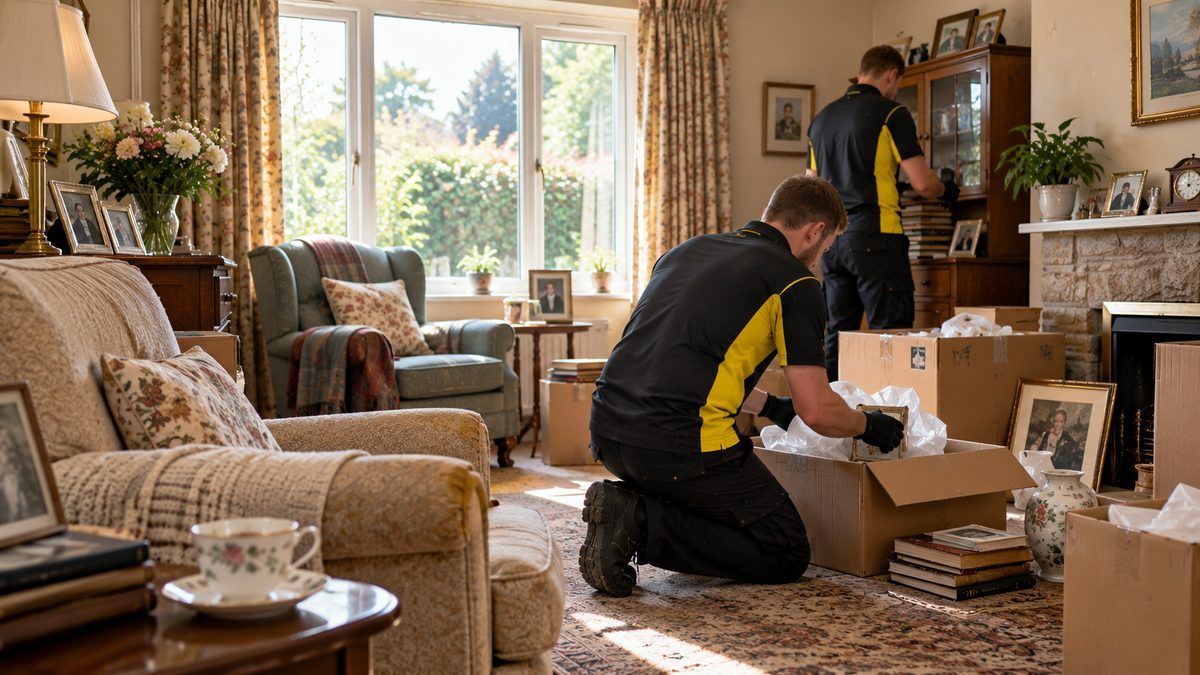
The person who deals with the property is usually the personal representative of the person who died. Where there is a will, that is normally the executor it names. Where there is no will, a close relative usually applies to become the administrator. Either way, this is the person with the authority to decide what happens to the contents, and the person a clearance firm should take instructions from.
In practice the work is often shared. One executor may live nearby and hold the keys while another handles the paperwork, or a solicitor may be acting for the estate. That is fine, but agree between you who makes the final decisions about the contents, so nobody books a clearance that another relative did not expect. If the home was rented, the landlord also needs to know the plan, because the tenancy and any notice period affect when it has to be empty.
This guide covers the practical side only. If you are unsure whether you have the authority to act, or the estate is complicated, speak to a solicitor before you commit to anything.
Clearing before or after probate
Probate is the process that confirms who can deal with the estate, and in Scotland the equivalent is called confirmation. People often ask whether the house has to stay untouched until it is granted, and the honest answer is that it depends on the estate, the will and who is involved. Many clearances happen after the grant, once the property is ready to go on the market. Others happen earlier, for example when a rented home has to be handed back.
Whatever the timing, a few general points hold. Keep a record of anything of value that leaves the property and what it sold for, because it forms part of the estate. Do not throw away paperwork until it has been checked. If there is any disagreement in the family about the contents, settle it before the clearance is booked rather than after. Whoever is handling the estate can tell you whether there is a reason to wait.
It is also worth telling the home insurer that the property is empty, because many policies change their terms once a house has been unoccupied for a while.
Has the family taken what it wants?
Send clear photos of each room that needs clearing and we reply with one fixed price for the whole property. The estate can be invoiced, and payment falls due once the house is empty.
Find the documents and keepsakes first
Before any clearance, someone from the family needs to go through the house. A clearance is about emptying rooms, not sorting through papers. That job belongs with the people who knew the person and know what matters to the family.
Start with documents. Look for the will if it has not already been found, along with bank and building society statements, pension and insurance letters, share certificates, deeds, passports, driving licences and recent bills. Check the obvious places, then the less obvious ones: bedside drawers, coat pockets, handbags, biscuit tins, the backs of wardrobes and the loft. Put everything you find in one box and take it away with you.
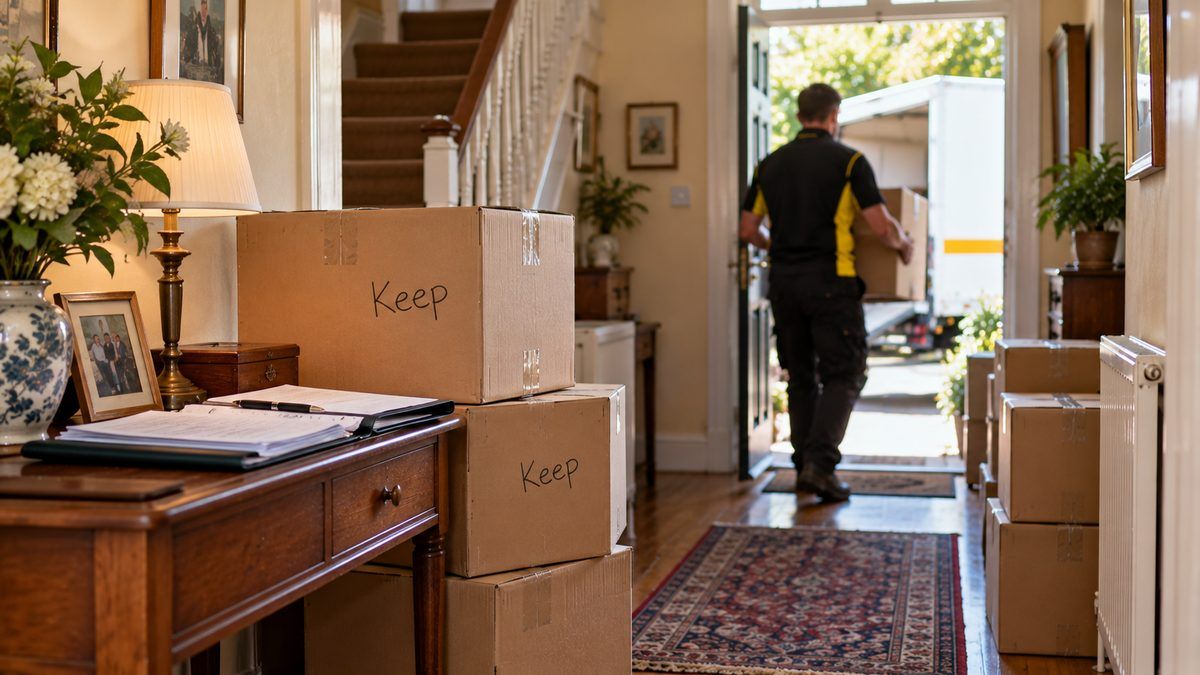
Then the personal things. Photographs, letters, jewellery, medals, watches, address books and anything of sentimental value should be taken out by the family, not left in a room with a note on the door. Walk round with the people who might want something and give them a date by which it must be collected. Plan on the basis that whatever is still in the house on the day will go.
Valuables, selling first, and reuse
If the contents include antiques, art, collections, good jewellery or quality furniture, have them looked at before the clearance. An auction house or a specialist dealer can tell you what is worth selling, and selling those pieces separately keeps the value with the estate. Deal with anything that has resale value first, before the clearance is booked.
Everyday furniture, kitchenware, books and clothes can often go to relatives, friends or neighbours, or be offered on a local listing. Some charities collect good furniture, though they tend to be choosy about condition and will not take a whole house. Will a charity clear a house looks at what to expect from that route.
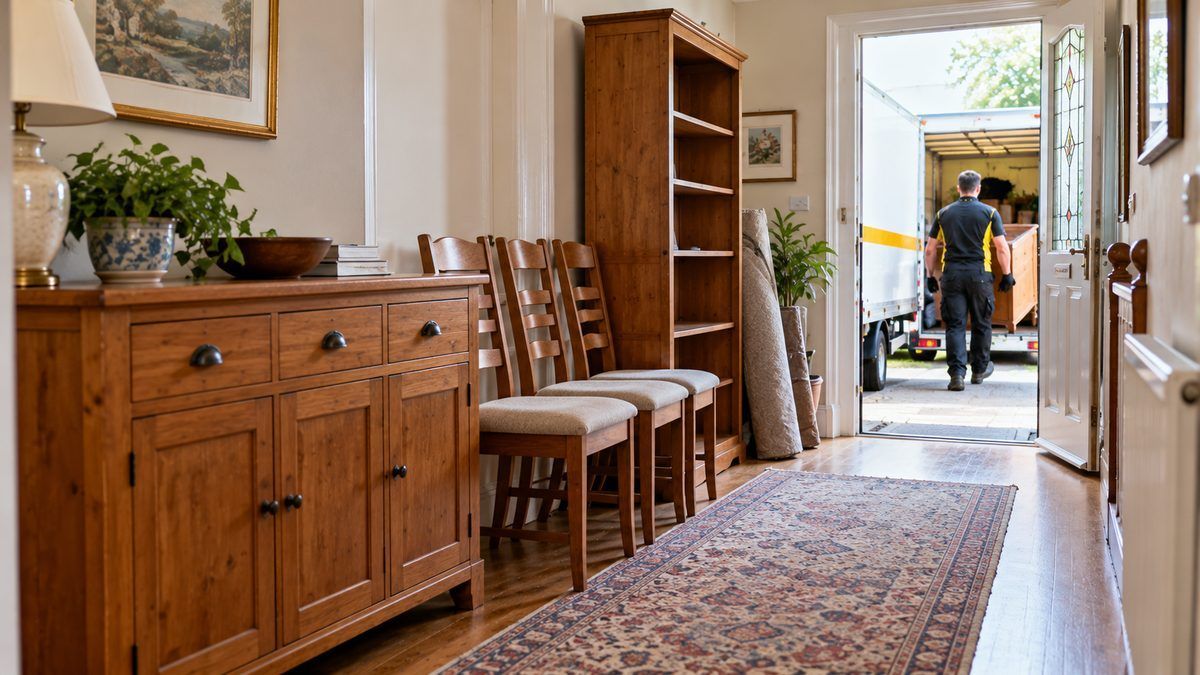
What is left after that is what the clearance covers. When we clear a property, usable furniture and household items are offered to charity or for reuse first, and the rest goes to a licensed waste transfer station where materials are separated for recycling. What happens to everything after a house clearance explains that side in more detail.
Booking the clearance from photos
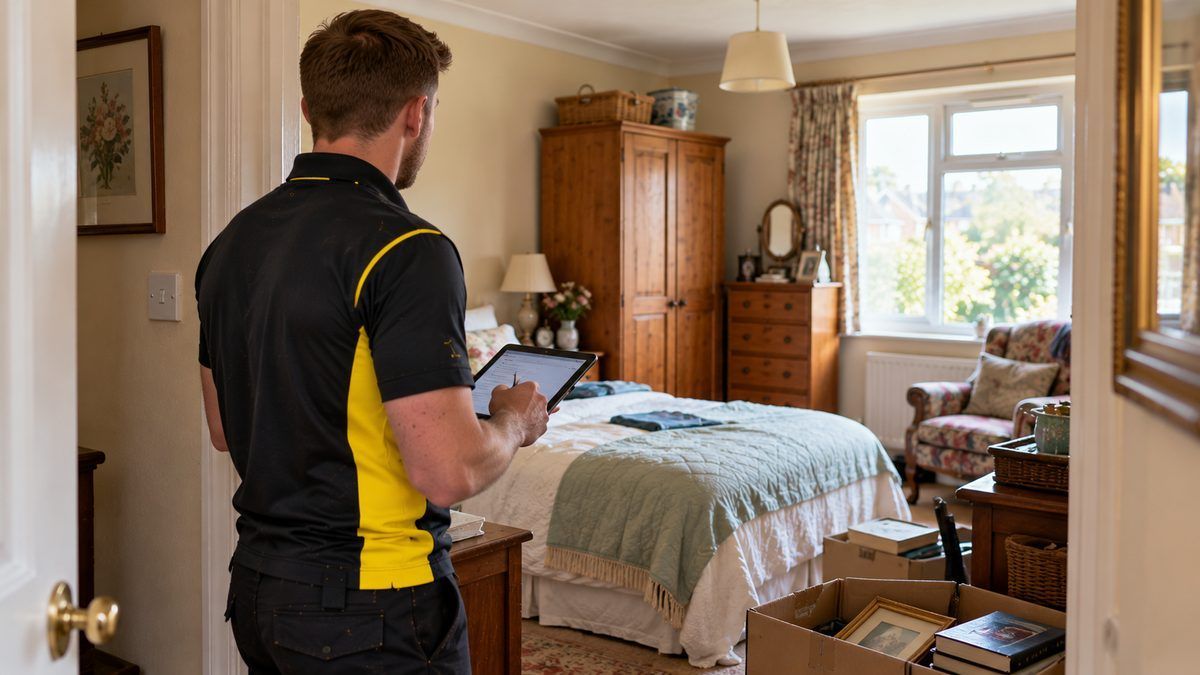
Once the family has taken what it wants, the clearance itself is simple to arrange. Walk through the house and take clear photos of each room that needs clearing, including the loft, the garage, the shed and the garden if anything is out there. Open wardrobes and cupboards so the photos show what is inside them. Send them through the form with the postcode and a line about access, such as stairs, parking or a long path to the door.
We reply with one fixed price for the whole job, covering the labour, the loading and the disposal. The crew empties every room in the agreed scope, from the loft down, and leaves the property swept for the estate agent, the valuer or the next owner. We offer the earliest date we can wherever possible, and you pick the day that suits the estate. If you want to know what moves the figure, what affects the cost of a house clearance explains it.
If you live far away, and paying from the estate
Executors often live hours from the property, and being there on the day is not always practical. You do not have to be. A key safe at the property, the solicitor acting for the estate, a letting agent or a trusted neighbour can let the team in. Tell us who holds the keys when you book, and we arrange the time with them directly. Our probate and estate clearance page covers this kind of job in more depth.
On probate and estate clearances we can invoice the estate, so the bill goes to the executor or the solicitor rather than to whichever relative made the booking. Payment is due once the property is empty. Keep the invoice with the estate paperwork, and ask for a waste transfer note if the solicitor wants a record of where the contents went. We hold upper tier waste carrier licence CBDU526130 with the Environment Agency, and any firm you consider should quote its own number without hesitation.
Questions people ask
Do I need probate before clearing a house?
Not always. It depends on the estate and the will, and some clearances take place before the grant, for instance when a rented home has to be returned. Ask whoever is handling the estate whether there is a reason to wait before the contents leave.
Should the family go through the house before the clearance?
Yes. Go through the house first and take out paperwork, keepsakes and anything of value before the day. Everything left in the rooms on the list is cleared, so agree between you what stays before you book.
Can the clearance go ahead if I cannot be there?
Yes. A key safe, the estate's solicitor, a letting agent or a neighbour can let the team in. Tell us who holds the keys when you book and we agree the timing with them.
Who pays for a house clearance after a death?
It is normally paid from the estate. On probate and estate clearances we can send the invoice to the executor or the solicitor, and it is settled once the property has been emptied.
Ready to clear the property?
Tell us the postcode, how many rooms there are and who holds the keys, and we reply with a fixed price for the whole house. Then send photos of each room so the figure is right first time.
- Registered waste carrier
- Fixed price from photos
- Pay once it is empty
- Earliest date we can offer

Get a fixed price from photos
Fill this in and we reply by email with a fixed price. Then send clear photos of each room that needs clearing, so the price is right first time.
Sent.
Photos not sending from this device? Send them to hello@house-clearance.uk with your postcode.