What affects the cost of a house clearance
No two clearances are the same, which is why a sensible price comes from looking at the property rather than a rate card. This guide goes through the things that make a clearance bigger or smaller, harder or easier, so you know what a quote is really based on.
Key points
- The volume of contents matters more than the number of bedrooms on the estate agent's listing.
- Lofts, garages, sheds and gardens add to the job, so include them when you ask for a price.
- Stairs, lifts, long walks to the van and parking restrictions all change how long a clearance takes.
- Fridges, freezers, mattresses and very heavy furniture can need extra handling or particular disposal routes.
- Clear photos of each room let a firm give you one fixed price that does not move on the day.
What goes into the price of a house clearance
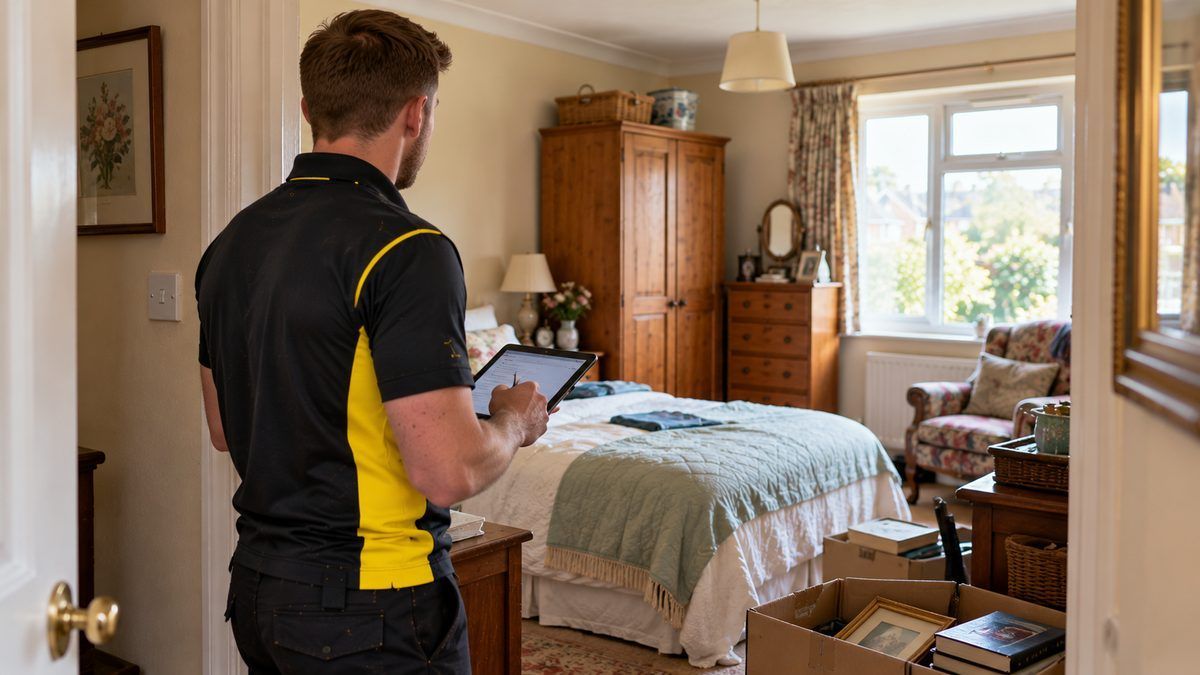
Every house clearance price is built from the same three parts. There is the labour, meaning the people carrying the contents out of the property. There is the transport, meaning the van and how many loads it takes. And there is the disposal, meaning what it costs to send everything to the right place, whether that is reuse, recycling or a licensed waste transfer station. Each factor in this guide changes one or more of those parts.
That is why two houses with the same number of bedrooms can be priced quite differently. A tidy home that someone is moving out of holds far less than one that has been lived in for forty years, with a full loft and a garage nobody has opened in a long time. The price follows the work, not the label on the property.
This guide does not give figures, because any figure given without seeing the property is a guess. What it does is explain what a firm looks at when it prices your job, so the quote makes sense when it arrives.
Property size and how full the rooms are
The size of the property sets the starting point. More rooms usually means more furniture, more cupboards and more boxes, and more time spent carrying it all out. A one-bedroom flat and a four-bedroom house sit at very different points before anything else is taken into account.
How full the rooms are matters just as much. A bedroom with a bed, a wardrobe and a chest of drawers is a quick job. The same bedroom with bags of clothes on the floor, boxes stacked high and a cupboard packed with old bedding takes far longer and fills much more of the van. Heavily cluttered homes are priced on what is actually there, room by room, which is why hoarder clearance is always quoted from photos rather than a room count.
Smaller jobs follow the same logic. If only one room, a few large items or the furniture needs to go, the price reflects that, and partial house clearance covers jobs that stop short of a whole house.
Want to know what your clearance would cost?
Send clear photos of each room that needs clearing, with a note about access, and we come back with one fixed price for the lot. You pay once the property is empty.
Lofts, garages, sheds and gardens
The spaces people forget are often the ones that hold the most. A loft can contain years of boxes, suitcases, old furniture and decorations, and every piece has to come down through a hatch and a ladder one at a time. That is slow, careful work, and it adds more time than the volume alone would suggest.
Garages and sheds are similar. They tend to hold heavy and awkward things such as old tools, bikes, garden furniture, timber offcuts and lawnmowers, and some of it simply takes up a lot of room in the van. If there are tins of paint or garden chemicals, we tell you what we can take when you send the photos. Mention every outbuilding when you ask for a price and photograph the inside of each one, along with anything left in the garden. Leaving them out of the quote only means a second conversation later.
Access, stairs and parking
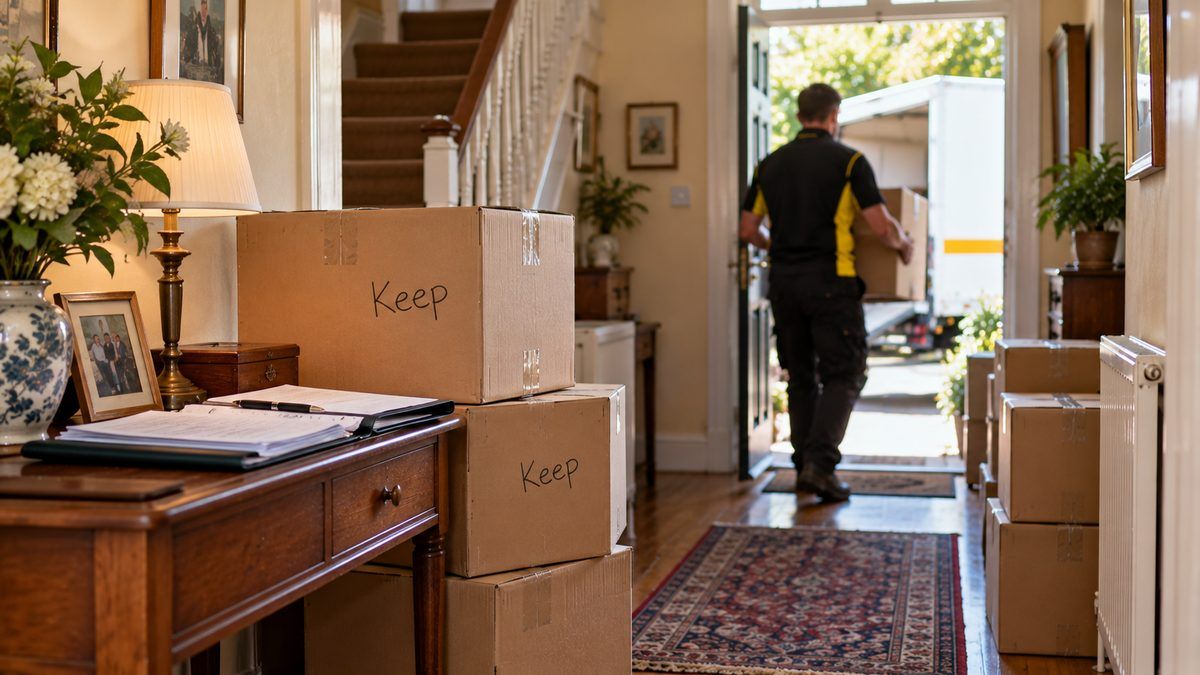
How easily the contents get from the room to the van makes a real difference. A ground-floor house with a driveway is the simplest case. A top-floor flat with no lift means every item is carried down several flights, and a narrow staircase with a tight turn can mean furniture has to be taken apart first. A lift helps, but a small one means more trips. Flat clearance covers stairs, lifts and shared entrances in more detail.
Then there is the distance between the front door and where the van can stop. A long path, a steep drive, steps up to the door or a block where the van has to wait round the corner all add carrying time. Controlled zones, double yellow lines, residents' bays and busy roads can limit where the van can park, and in some streets a permit or a suspended bay may be needed. Mention any of this up front, because it shapes both the price and the plan for the day.
Heavy items and things that need special handling
Some items take more effort than their size suggests. Pianos, cast iron baths, solid wood wardrobes, large fridge freezers, safes and stone garden ornaments are heavy, and some need extra hands to move safely. If anything like this is in the property, make sure it shows up clearly in the photos.
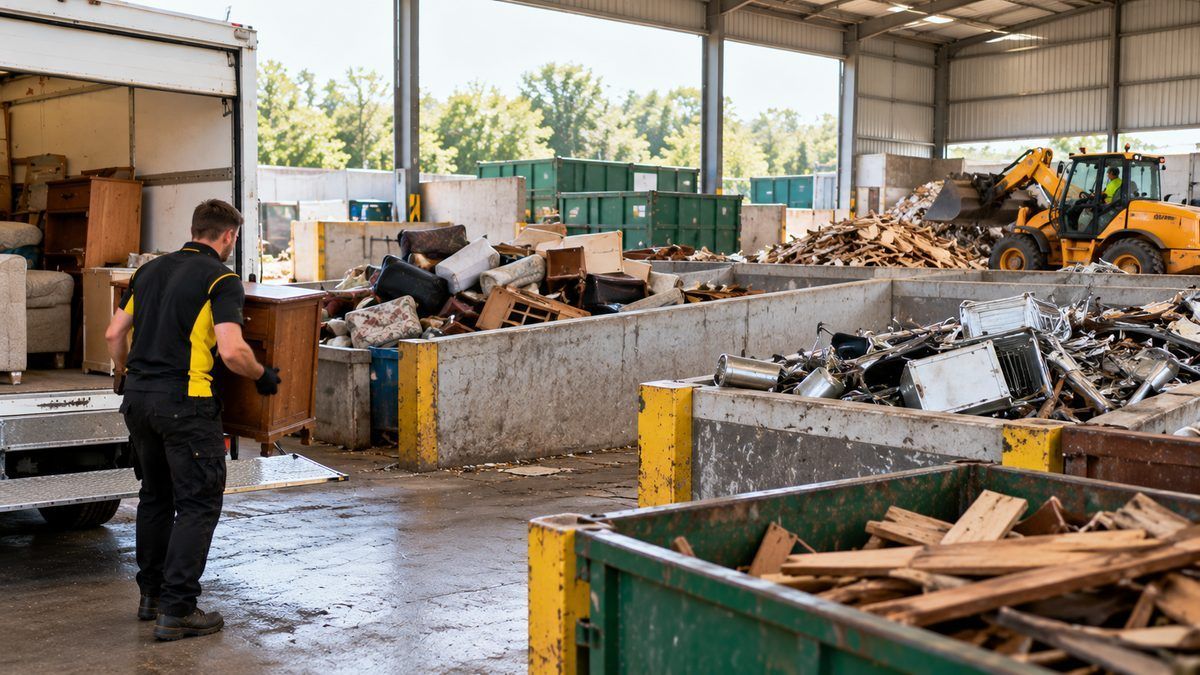
Other items are easy enough to lift but cannot simply go in with general waste. Fridges and freezers contain refrigerants and insulation that have to be dealt with at facilities set up for them. Mattresses are bulky and are often sent to specialist recyclers rather than treated as general waste. Televisions, monitors and other electrical items are handled as electrical waste too. None of this makes them a problem to clear. It just means the disposal side of the price has to allow for them, which is another reason a fixed price should rest on what is really in the property.
Timing, and how a fixed price from photos works
Timing plays a part as well. If the property has to be empty by a set date, for a sale completion or the end of a tenancy, say so when you ask for a price. A clearance tied to one particular day leaves less room for planning than one where you can be flexible. We offer the earliest date we can wherever possible, and a little flexibility on your side helps.
The way to get a reliable figure is to show the firm what is there. Walk through the property and take clear photos of each room that needs clearing, with cupboards and wardrobes open, plus the loft, garage, shed and garden. Add a short note about stairs, lifts, parking and anything very heavy. Send them through the form with the postcode, and we reply with one fixed price covering the labour, loading and disposal. That is the figure you pay once the property is empty.
If you are weighing a clearance against doing the work yourself, house clearance or skip hire compares the two, and how to prepare for a house clearance covers what to sort out before you take the photos.

Questions people ask
Why is the price based on photos rather than the number of bedrooms?
Because the number of bedrooms says little about how much is inside. Photos show the furniture, the boxes, the loft and the access, so the price reflects the real job and does not need to change when the crew arrives.
Does a loft or garage add to the cost?
Usually, because it adds contents and time. A loft has to be emptied through a hatch, and garages often hold heavy or bulky items. Include them in your photos so they are part of the fixed price from the start.
Do fridges and mattresses cost more to clear?
They can add to the disposal side of the job, because they go to particular facilities rather than in with general waste. We clear them along with everything else, and they are included in the one price we send.
Can the price change on the day?
The fixed price rests on the photos you send, so make sure they show every room and space that needs clearing. If the property matches the photos, the price you were given is the price you pay once it is empty.
Ready for a fixed price?
Tell us the postcode, the type of property and what needs clearing, and we reply with one fixed price. Then send photos of each room, the loft and any outbuildings so nothing is missed.
- Registered waste carrier
- Fixed price from photos
- Pay once it is empty
- Earliest date we can offer

Get a fixed price from photos
Fill this in and we reply by email with a fixed price. Then send clear photos of each room that needs clearing, so the price is right first time.
Sent.
Photos not sending from this device? Send them to hello@house-clearance.uk with your postcode.