What happens to everything after a house clearance
Once the last box is on the van, the property is empty, but the contents still have somewhere to go. This guide follows them from the front door to reuse, recycling and, for a small share, disposal, and explains the paperwork that shows it was all done properly.
Key points
- Clean, complete and working items are offered to charity or for reuse before anything else.
- Everything else goes to a licensed waste transfer station, where it is sorted by material.
- Wood, metal, textiles and cardboard are split into separate streams for recovery.
- Fridges, electricals and upholstered seating each follow their own separate disposal route.
- A waste transfer note is available on request, under upper tier licence CBDU526130.
Reuse and charity come first
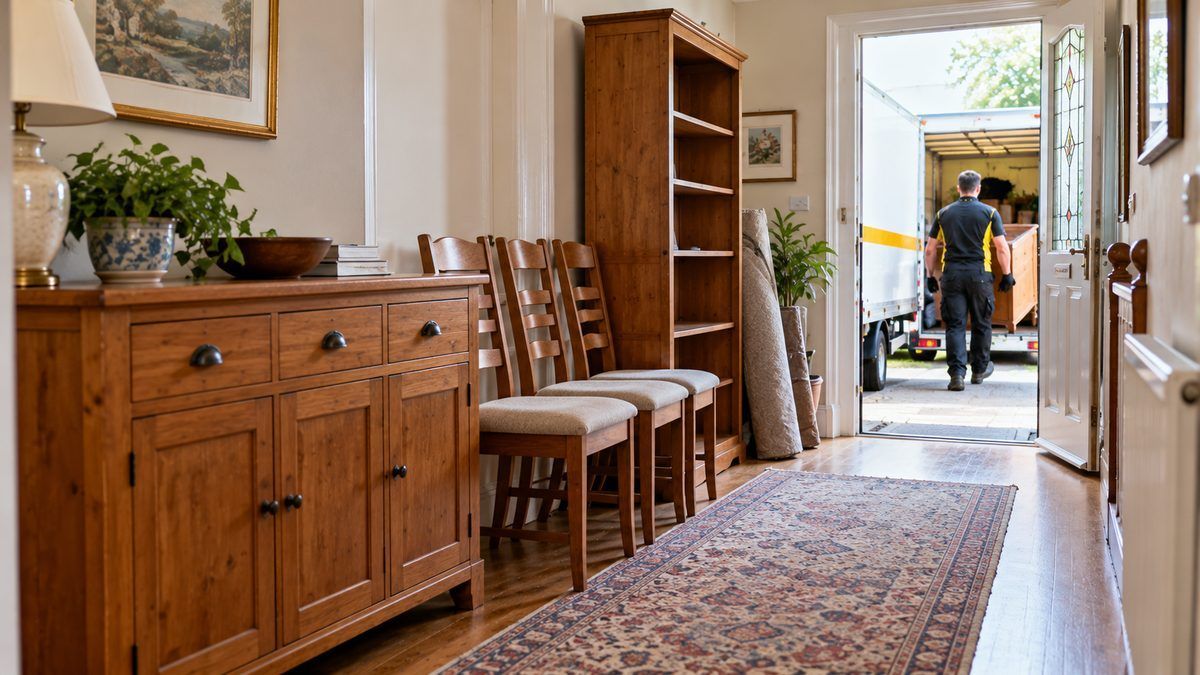
A house clearance is not one big load of waste. A typical home holds furniture, kitchenware, books, bedding, ornaments, garden tools and boxes that have not been opened in years, and a lot of it still has use left in it. When the crew carries out something that is clean, complete and in working order, it is offered to charity or for reuse before anything else happens to it. A solid wardrobe, a set of dining chairs or a box of good crockery can go on to another home rather than being broken down for material.
What decides reuse is condition, not value or age. A sideboard with a split top, a mattress that has been slept on for years or a chair with a broken leg will not be accepted for reuse however well it was made. If you know particular pieces are in good order, mention them when you send clear photos of each room that needs clearing, so the crew knows to keep them in one piece. If you want to arrange a charity collection yourself first, will a charity clear a house explains how that fits around a clearance.
The licensed waste transfer station
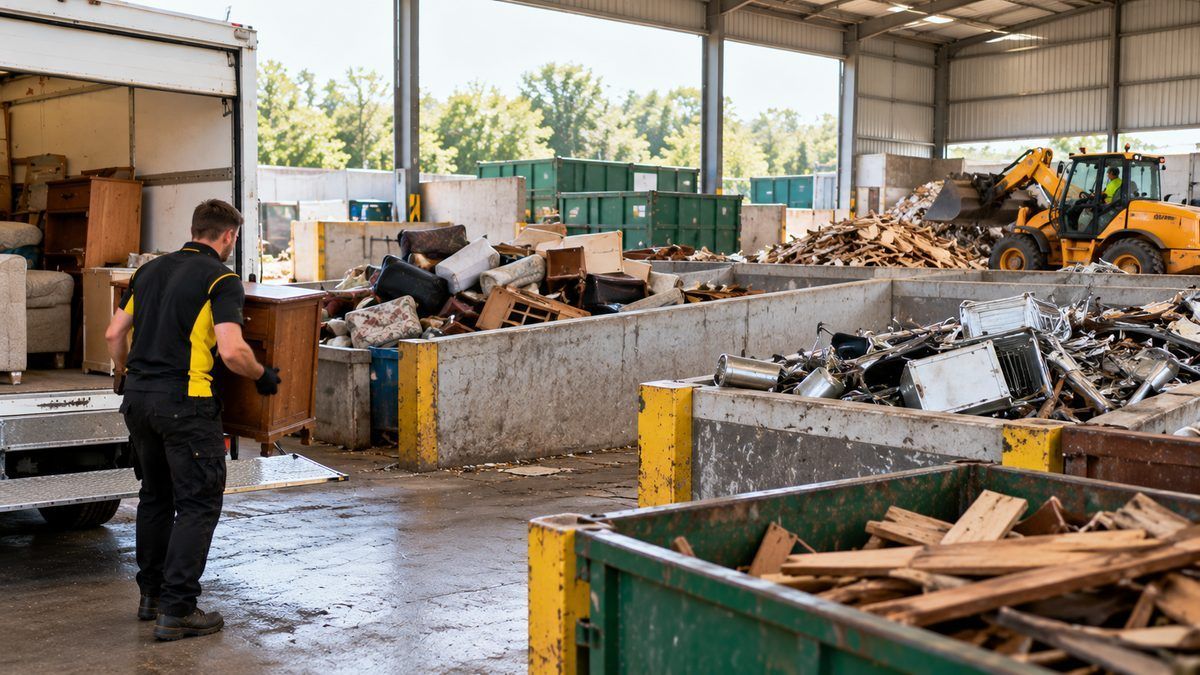
Everything that is not reused goes to a licensed waste transfer station. This is a permitted site where mixed loads from vans and lorries are tipped, sorted and split into separate material streams, each of which then travels on to a specialist processor. It is not a landfill site, and it is not the same as the household tip you might visit with a car boot full of bags. Its whole purpose is to pull as much recoverable material out of each load as possible.
Loads are usually weighed in and out, and the site keeps a record of what came in and who brought it. That record is part of how waste is tracked from your front door to its final destination. It is also why it matters who takes your house contents away: a licensed carrier has to use permitted sites, and a van with no licence has no reason to go anywhere near one.
Want the whole house cleared and disposed of properly?
Send clear photos of each room that needs clearing and we reply with one fixed price. Usable items go for reuse first, the rest to a licensed site, and a waste transfer note is yours on request.
How wood, metal and textiles are separated
At the transfer station the load is broken down by material. Wood is usually the biggest stream from a house clearance, made up of wardrobes, beds, tables, shelving and flat-pack units. Solid timber and board products such as chipboard and MDF tend to be graded separately, because they are recovered in different ways, but both are kept out of the residual stream wherever possible.
Metal is pulled out early, from bed frames and filing cabinets to the hinges and runners left in a broken chest of drawers. It is one of the most straightforward materials to recycle and goes on to scrap processors. Textiles such as clothes, curtains and bedding are separated too, and the cleaner items can be passed on for reuse or turned into lower grade materials. Cardboard, paper and some plastics are also split out where the site can handle them.
None of this sorting is something you need to do before the crew arrives. Bagging clothes or boxing books can make the day quicker, and the how to prepare for a house clearance guide covers what is genuinely useful and what is wasted effort.
Fridges, freezers and other electricals
Anything with a plug or a battery falls into a separate category known as waste electrical and electronic equipment, usually shortened to WEEE. That covers washing machines, cookers, microwaves, televisions, lamps, kettles, vacuum cleaners and the power tools in the garage. These items cannot simply go in with general waste, because they contain materials that need careful handling and components that are worth recovering.
Fridges and freezers need extra care. The cooling system and the insulation inside them contain gases that have to be captured at a specialist treatment facility rather than released, so they are handled apart from other bulky items. Other electricals are taken apart at approved facilities so that metals, plastics and circuit boards can be recovered. If you are clearing a kitchen full of appliances, there is nothing extra for you to do except include them in your photos.
Sofas, armchairs and other upholstered furniture
Upholstered seating is another category dealt with separately. Sofas, armchairs, sofa beds, footstools and padded dining chairs can contain chemicals in their foam, fabric and filling that waste rules say should be destroyed rather than recycled or buried. In practice that means they are kept apart from general bulky waste and sent to facilities that can treat them properly.
The exception is a piece that is clean, sound and still carries its fire safety label, which may be suitable for reuse. Most sofas coming out of a house clearance have seen years of use, though, and the honest answer is that the majority go down the separate disposal route. Mattresses follow their own path too, as the springs, foam and fabric need to be separated before any of the material can be recovered.
What cannot be recycled
A share of any house clearance cannot be recovered as material. Items that are badly damp or mouldy, laminate furniture that has come apart in layers, mixed materials glued together, worn-out bedding, broken ceramics and general household rubbish tend to end up in the residual stream. So do things contaminated with oil, food or pet waste that cannot be cleaned off.
Residual waste from a licensed site usually goes for energy recovery, where it is burned under permit to generate power, with landfill as the last resort. We recycle 90% of what we collect, and the remainder is mostly this kind of material. Paint tins, chemicals and gas bottles from a garage or shed need their own handling, so mention them when you send photos and we tell you what we can take.
The waste transfer note, duty of care and the licence
Anyone who passes on household waste has a legal duty of care to make sure it goes to someone authorised to take it. For a householder, an executor or a landlord, that means checking the carrier is registered before handing anything over. If contents are given to an unlicensed collector and later found dumped, the person they came from can be held responsible as well as whoever dumped them.
A waste transfer note records what was taken, where it came from, who carried it and where it went. We provide one on request, and executors, solicitors and landlords clearing a rental often keep it with their records as proof the property was cleared properly. On a probate clearance it sits neatly alongside the other estate paperwork.
Our upper tier waste carrier licence is CBDU526130, registered with the Environment Agency. Upper tier is the registration needed to carry other people's waste as a business, and anyone can check a number on the public register in a couple of minutes. A genuine carrier will give you theirs without hesitation. After 15+ years and 500+ jobs, knowing exactly where each load goes is simply part of the work.

Questions people ask
Will you tell me where the contents of the house went?
Yes. We can tell you which licensed site took the load, and a waste transfer note on request records it in writing. Whether a particular item was reused depends on its condition when the crew saw it, and we will not pretend every piece finds a new home.
Do I need to separate the fridge and electricals before you arrive?
No. Leave them where they are and include them in your photos. The crew carries them out with everything else, and they are kept apart from general waste so they can go for specialist treatment.
What does 90% recycled actually mean?
It is the share of what we collect that is reused or recovered as material rather than going into the residual stream. What is left is mainly damp, broken or mixed material that no facility can recover.
Does a householder need a waste transfer note?
Householders are not usually asked for one, but it is good evidence that the contents went with a licensed carrier to a permitted site. Executors and landlords find it especially useful. Ask when you book and we send it after the clearance.
Ready to clear the property?
Fill in the form for a fixed price covering the lifting, loading and disposal. After that, send photos of each room so nothing is missed from the quote.
- Registered waste carrier
- Fixed price from photos
- Pay once it is empty
- Earliest date we can offer

Get a fixed price from photos
Fill this in and we reply by email with a fixed price. Then send clear photos of each room that needs clearing, so the price is right first time.
Sent.
Photos not sending from this device? Send them to hello@house-clearance.uk with your postcode.