Will a charity clear a house?
Giving a home's contents to charity feels like the right thing to do, and for the best pieces it often is. But a charity collection and a house clearance are different jobs. Here is what charities usually take, what they leave behind and how to make the two work together.
Key points
- Charities usually take clean, complete items they can sell or pass on quickly.
- Sofas, armchairs and mattresses generally need their original fire safety label.
- A charity collection picks out the best pieces; it does not empty a property.
- Book the charity first, then a clearance for everything that is left behind.
- Usable items from our clearances are still offered to charity or reuse first.
What charity collections usually take
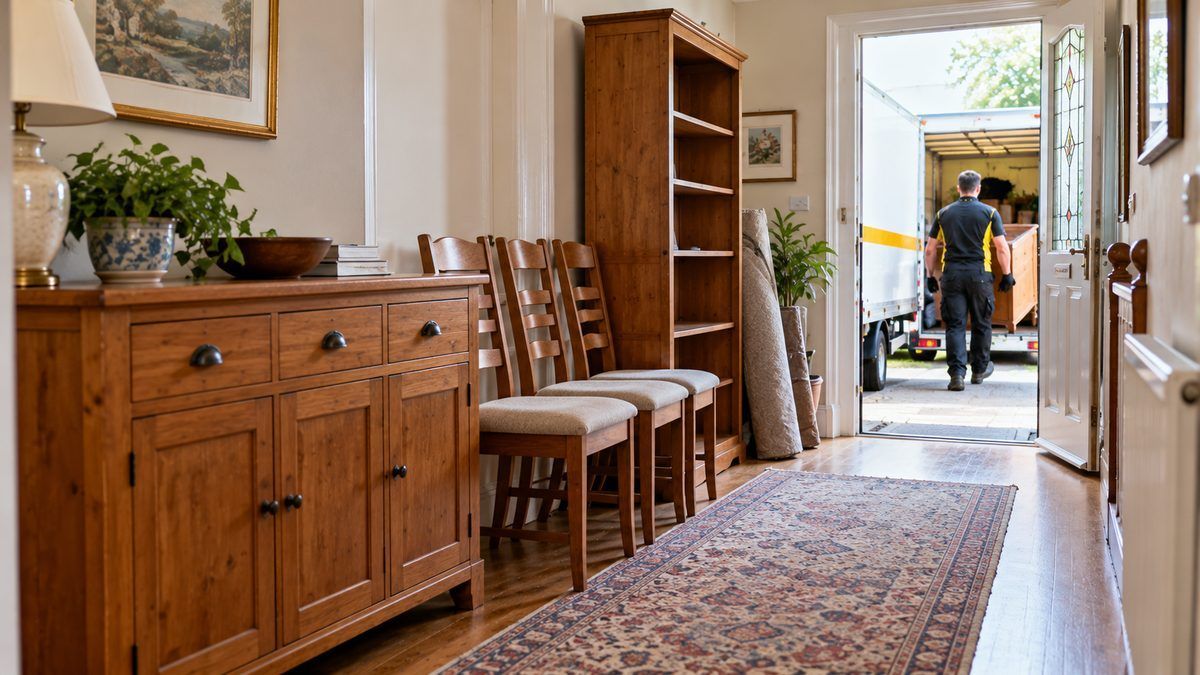
Many charity shops and furniture reuse organisations run collection services for donated goods. They are generally looking for items they can sell or pass on quickly: sofas and armchairs in good condition, dining tables and chairs, wardrobes and chests of drawers without damage, and boxes of clean homeware, books and clothes. The common thread is that each item must be clean, complete and ready to go straight onto a shop floor or into another home.
Policies differ between organisations and can change, so the only reliable way to know what a particular charity will take is to ask it directly. Some accept electrical appliances if they can be safety tested, while others will not take them at all. Some collect furniture only, and others also take bagged goods. Phone the charity or check its own website before you plan anything around a collection.
Condition and fire labels on upholstered items
Condition is the first hurdle. Stains, rips, missing handles, pet hair, smoke damage or a smell of damp will usually mean an item is turned away, even if it is solid underneath. The people collecting often make the final decision at the door, so a piece that looked fine in a photo can still be refused on the day if it does not pass a closer look.
Upholstered furniture faces an extra test. Sofas, armchairs, sofa beds, headboards and mattresses sold second-hand generally need to carry their original fire safety label, the permanent tag usually found under the seat cushions or stitched to the frame. Without it, a charity cannot normally resell the item, so it is commonly refused however good it looks. Before you book anything, check each upholstered piece for that label.
Need the rest of the house cleared?
Tell us what the charity is taking, send photos of each room, and we reply with one fixed price for everything left. Usable items still go for reuse first.
Why a charity rarely takes a whole house
Even a generous charity collection is selective by design. A shop needs stock it can sell, not the contents of every cupboard, so the half-used tins, old paperwork, worn bedding, broken chairs and decades of loft boxes stay behind. Most homes being cleared contain far more of that than saleable furniture, especially after someone has lived there for many years.
Charity collection teams also work to a tight round of pickups across their area, and many prefer items that are easy to reach. They are not set up to empty a loft, carry a garage full of tools to a van or sweep the rooms once they are done. That is not a criticism, simply a different service. A charity takes the best items, and it does not clear a property.
How long you might wait
Collection dates depend on the charity, the area and the time of year. In some places a slot comes up fairly quickly, while in others the next available date is some way off, and busy periods can push it back further. If you are working to a deadline, such as a tenancy ending or keys due back to a landlord, the wait for a charity can become the thing that holds everything else up.
Ask for a date before you book anything else, and have a fallback plan in case the collection is cancelled or the driver refuses some items. Refused items still need to go somewhere, and they are often the bulkiest ones in the house.
Waiting also costs you in other ways. An empty property still needs checking, heating in winter and keeping secure, and a rental that sits full cannot be relet. If only a handful of pieces are worth donating, it can make more sense to let the clearance go ahead and rely on the reuse that happens afterwards than to hold the whole job for one collection.
Combining a charity collection with a clearance
The two work well together if you get the order right. Arrange the charity collection first for the pieces you are confident it will accept, then book the clearance for a date after it. When you send clear photos of each room that needs clearing, say which items the charity is taking, so the fixed price reflects what will actually be left.
If the charity falls through or leaves things behind, tell us before the clearance day and we confirm whether the price still stands. Usable furniture and household items from our clearances are offered to charity or for reuse first anyway, so decent pieces you could not place yourself still get a chance at a second home. The what happens to everything after a house clearance guide explains the rest of that journey.
What to do with everything else
Whatever the charity does not take still needs to leave the property. For a few items, your council's bulky waste collection or a trip to the local recycling centre may be enough. For a whole house, or a property with a full loft and garage, a full house clearance deals with all of it in one booking, from the furniture to the last bag of paperwork.
If the charity has taken most of the furniture and only a few rooms or odd items remain, a partial clearance covers just what is left. On a probate property, the executor or solicitor can arrange the charity collection and the clearance in the same week, and we can invoice the estate. The how to clear a house after a death guide walks through that process step by step.

Questions people ask
Will a charity take a sofa without a fire label?
Usually not. A charity generally needs the original fire safety label to resell upholstered furniture, so a sofa or armchair without one is normally refused. Check with the charity, but plan for it to need another route.
Should the charity come before the clearance?
Yes. Book the charity collection first and the clearance once that date is confirmed. Leaving a gap between the two means anything the charity refuses can be added to the clearance without a rush.
Do you offer items to charity as part of a clearance?
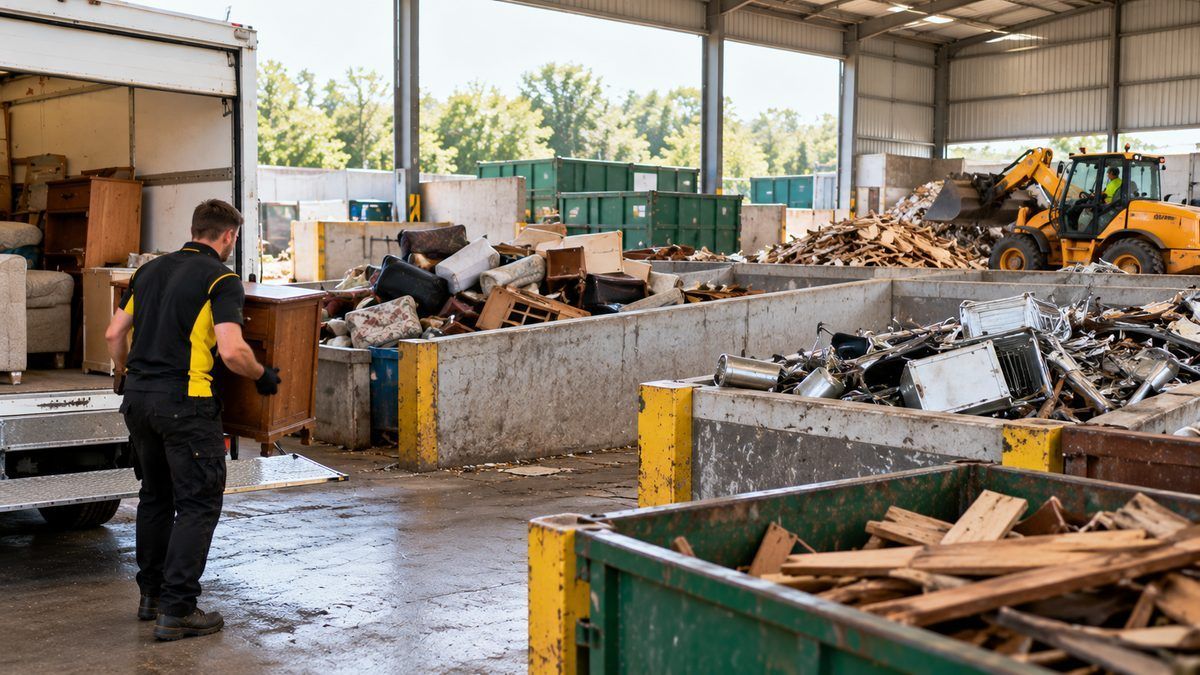
Yes. Anything clean and usable that comes out of the property is passed to charity or for reuse before the remainder heads to a licensed waste transfer station.
What if the charity refuses items on the day?
Leave them where they are and let us know before the clearance. Send a photo of what is left and we tell you whether the fixed price still covers it.
Ready for a price on what is left?
Use the form to tell us about the property and what the charity is taking. We reply with a fixed price, and photos of each room make sure it is accurate.
- Registered waste carrier
- Fixed price from photos
- Pay once it is empty
- Earliest date we can offer

Get a fixed price from photos
Fill this in and we reply by email with a fixed price. Then send clear photos of each room that needs clearing, so the price is right first time.
Sent.
Photos not sending from this device? Send them to hello@house-clearance.uk with your postcode.