How to prepare for a house clearance
A clearance goes most smoothly when a few decisions are made beforehand. None of it takes long, and most of it is about making sure the right things leave the property and the right things stay. This guide works through it in the order that usually makes sense.
Key points
- Decide room by room what stays and what goes, and get everyone involved to agree before the day.
- Take anything you are keeping out of the property, or at least gather it in one space that is not being cleared.
- Remove documents, keys, cards and paperwork yourself, because the crew clears rather than sorts.
- Keep the lights working, note the meter readings, and sort out parking and access for the van.
- Clear photos of every room, with cupboards open, are what a fixed price is built on.
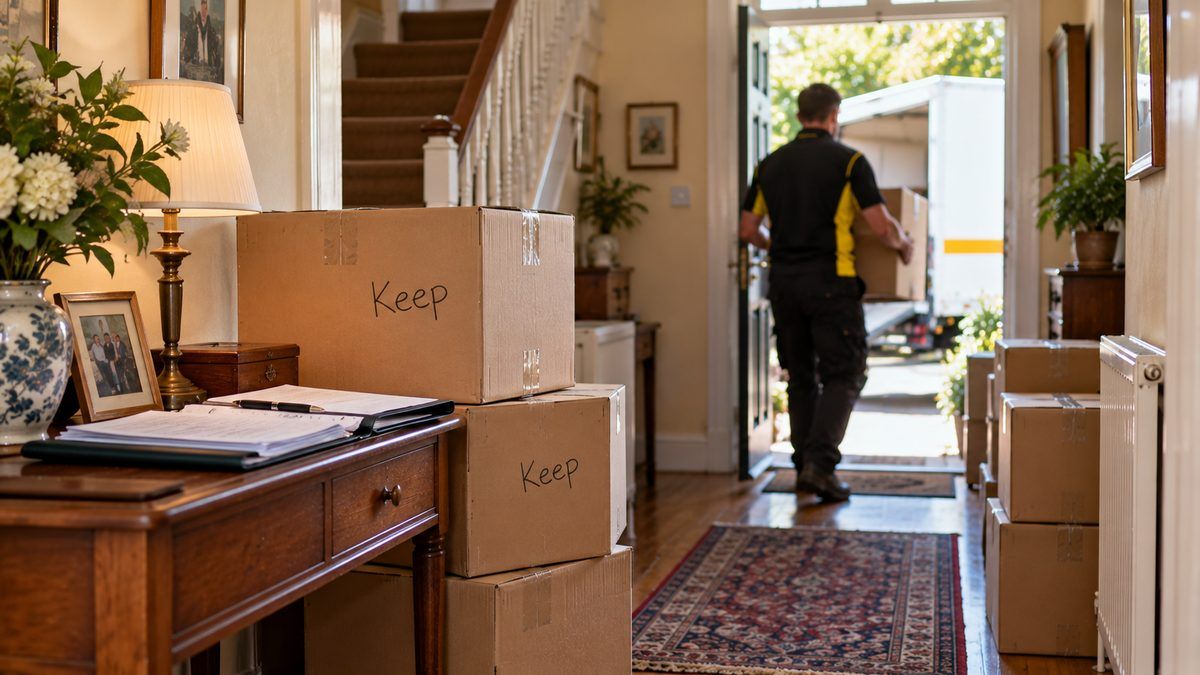
Decide what stays and what goes
The first job is deciding the scope. Is the whole property being emptied, or only certain rooms? Are carpets, curtains and light fittings staying with the house, or do they need to go too? Is anything in the garden, the shed or the garage being kept? Walk through each room with a notepad and write down the answer, because what feels obvious to you will not be obvious to anyone else.
If several people have a say, involve them now. Relatives, a partner, a co-executor or a landlord may all have a view on what should be kept, and it is far easier to settle that before the clearance than after it. Once you have agreed, set a clear deadline for anyone who wants to collect something. If you are clearing after a bereavement, how to clear a house after someone dies covers the wider order of things.
Remove or clearly separate what you are keeping
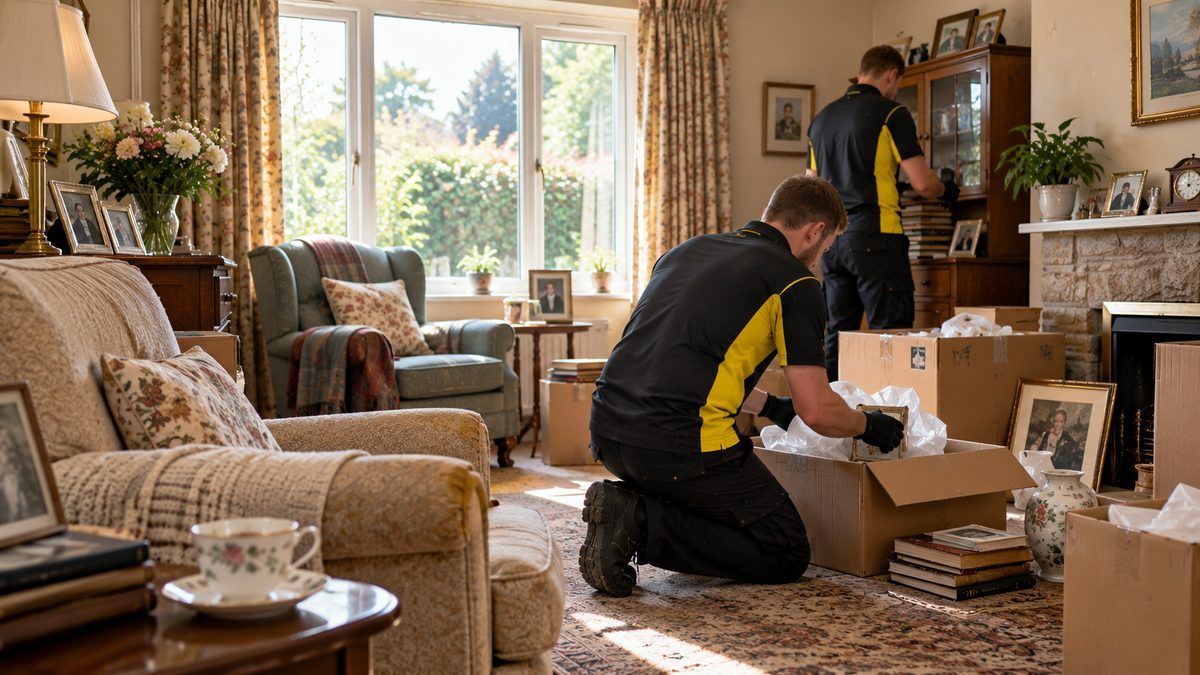
The surest way to keep something is to take it out of the property before the clearance day. Keepsakes, photographs, jewellery, small furniture you want and garden tools you still use can mostly go in a car. A clearance crew works steadily through rooms that have been agreed as going, and the fewer exceptions there are inside those rooms, the less chance of a mistake.
Where something is too big to move yourself, such as a piece of furniture the buyer of the house has agreed to keep, put it in a room or space that is not being cleared and say so when you book. Shut the door, add a sign, and mention it again on the day. Avoid leaving kept items dotted through rooms that are otherwise being emptied, and do not rely on sticky notes, which fall off. Clear instructions protect both you and the crew.
Got your photos ready?
Send clear photos of each room that needs clearing, with a note about anything that is staying, and we reply with one fixed price. The crew clears what was agreed and you pay once it is empty.
Find and take out documents
Paperwork is easy to miss because it hides in ordinary places. Before the clearance, go through drawers, bureaus, filing boxes, shelves, handbags, coat pockets and the loft for anything with personal or financial details on it. That includes bank statements, pension letters, insurance policies, passports, birth and marriage certificates, wills, deeds, old cheque books and recent bills.
Keep what you need, and shred anything with personal details on it that you do not need. Then check again. A clearance team is there to carry contents out and does not read through papers looking for what is important, so if a document matters, it should be in your hands before the van arrives. Spare keys, bank cards and remote controls for garage doors or gates are worth collecting at the same time.
Utilities, meters and the post
Leave the electricity on until the clearance is finished. The crew needs working lights in lofts, cellars, garages and stairwells, and a dark loft makes the job slower and less safe. If the property has a prepayment meter, make sure there is enough credit to last the day.
Take meter readings and photograph the meters before and after the clearance, so you have a record for the suppliers. If the property is going to stand empty, ask the energy suppliers and the insurer what they need from you, and redirect the post so nothing important piles up behind the front door. If fridges or freezers are going, switch them off and empty them a day or two beforehand so they can defrost and be moved without leaking.
Access, parking, neighbours and managing agents
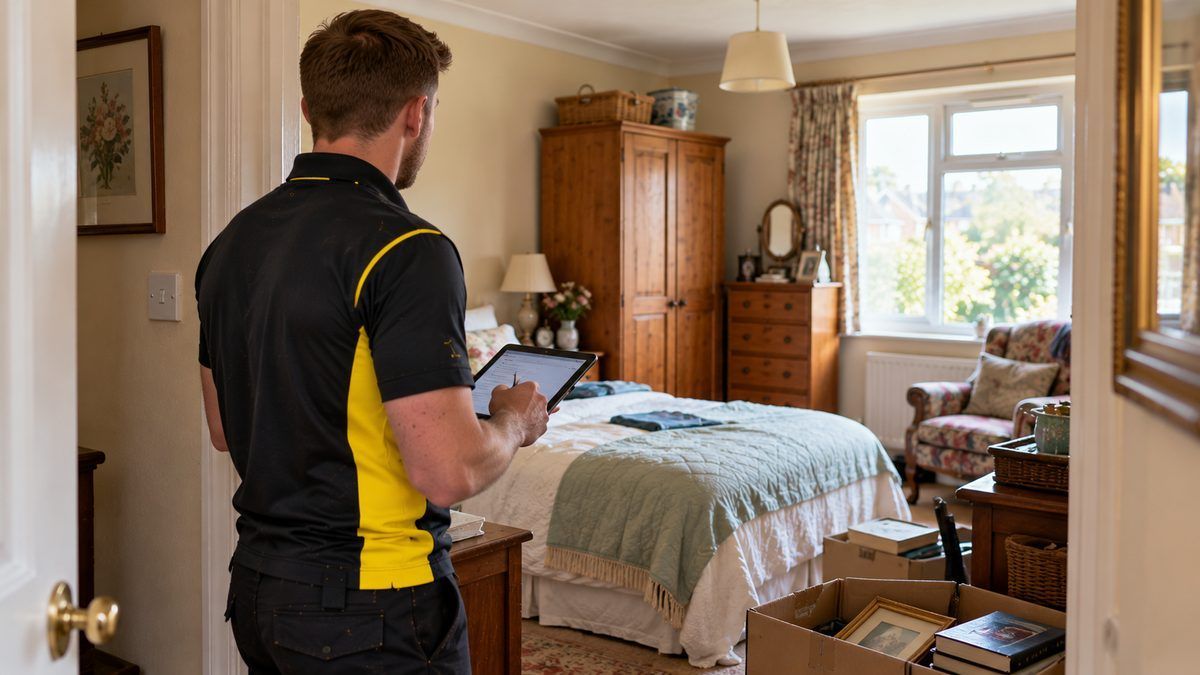
Think about the route from each room to the van. Clear loose things off the hallway and stairs, make sure doors open fully, and note anything awkward such as a tight turn or a low ceiling. If there is a loft, check the hatch opens and whether a ladder is fitted. Mention all of this when you send your photos.
Parking is the other half of access. If there is a drive, keep it free on the day. If the van will need to stop on the road, check for restrictions, and where the street is permit-only, ask the council whether a visitor permit or a bay suspension is needed. In a block of flats, give the managing agent or building manager the date, since some buildings ask for lifts to be booked or protected and for removals to happen at set times. Flat clearance covers working with shared entrances and lifts.
A word with the neighbours helps too. Let them know the van will be outside for a few hours, especially if you share a drive or a narrow lane. Most people are happy to move a car when they are asked the day before rather than on the morning itself.
Photograph each room for your quote
Your photos are what the price is built on, so they are worth a few extra minutes. Take clear photos of each room that needs clearing, standing in the doorway so the whole room is in view, then take a second shot from the opposite corner. Open wardrobes, cupboards and the space under the stairs so the contents can be seen. Photograph the loft from the top of the ladder, and the inside of the garage, shed and any outbuildings. If a room holds anything that is staying, point it out in your note.
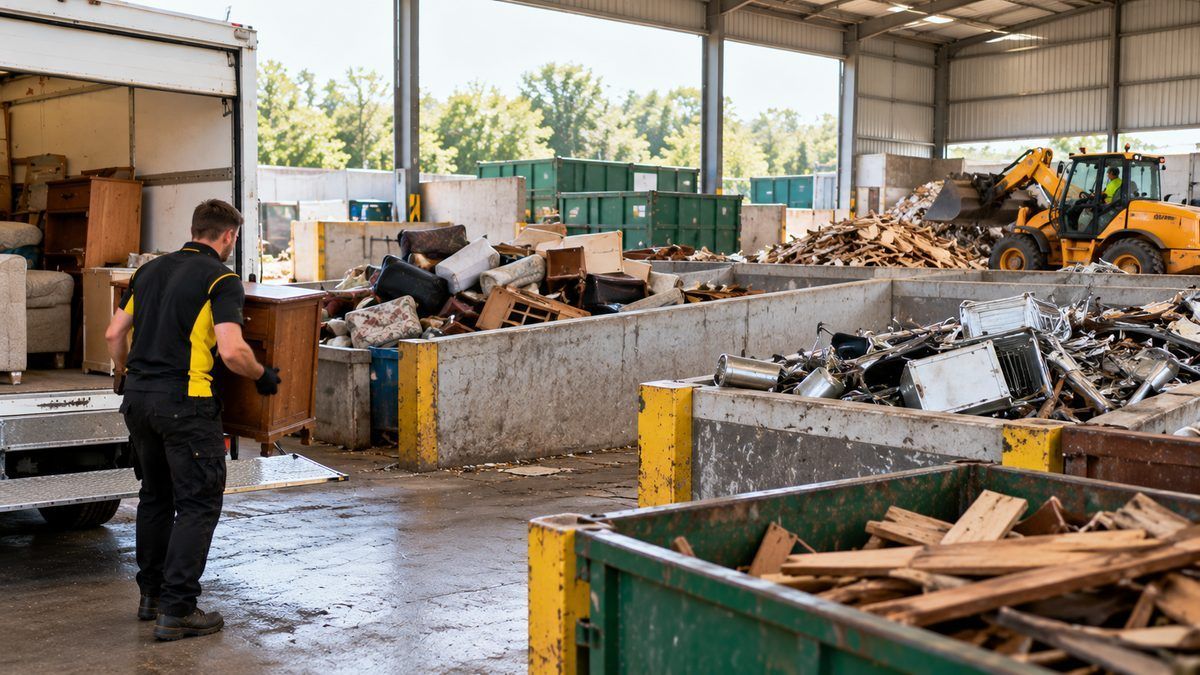
Send the photos through the form with the postcode and a short line about stairs, lifts and parking. We reply with one fixed price for the whole job and offer the earliest date we can, then the crew clears what was agreed and leaves the property swept. You pay once it is empty. For more on what moves the figure, see what affects the cost of a house clearance, and for where everything ends up, read what happens to everything after a house clearance.
Questions people ask
Do I need to empty cupboards and drawers before a house clearance?
No. The crew clears cupboards and drawers along with everything else. Just take out anything you want to keep, especially documents and small valuables, before the day.
Should I leave the electricity on for the clearance?
Yes, until the clearance is finished. The team needs working lights in the loft, the garage and on the stairs, and a dark property makes the job slower.
Do I need to be at the property on the day?
Not necessarily. A key safe, a letting agent, a solicitor or a neighbour can let the team in, as long as everyone is clear in advance about what is going and what is staying.
How many photos should I send for a quote?
Enough to show every room, the loft and any outbuildings, ideally two per room from opposite corners with the cupboards open. More photos mean fewer surprises and a price that holds.
Ready to book your clearance?
Tell us the postcode, the type of property and which rooms are being cleared, and we reply with a fixed price. Then send photos of each room so the quote covers everything.
- Registered waste carrier
- Fixed price from photos
- Pay once it is empty
- Earliest date we can offer

Get a fixed price from photos
Fill this in and we reply by email with a fixed price. Then send clear photos of each room that needs clearing, so the price is right first time.
Sent.
Photos not sending from this device? Send them to hello@house-clearance.uk with your postcode.